
Morocco joins the exclusive circle of countries assembling aircraft engines
Under royal impetus, Morocco is taking a new step in the aeronautics sector with the new aircraft engine complex by Safran. Two factories, with an investment of 3.4 billion MAD, will be established in Nouaceur, dedicated to the assembly and maintenance of LEAP aircraft engines.
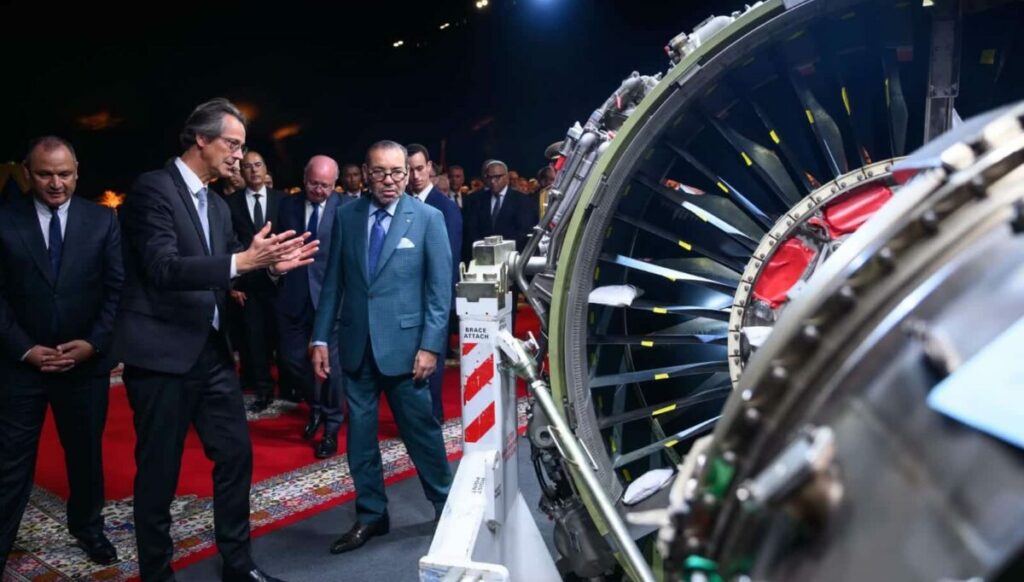
Morocco reaches a new milestone in the development of its aerospace industry with the signing of three agreements between the Kingdom and the Safran group to establish an industrial complex in Nouaceur for the assembly, testing, and maintenance of LEAP aircraft engines.
The project, whose launch ceremony was presided over by King Mohammed VI, further illustrates Morocco’s growing presence in advanced technological sectors.
Producing and maintaining LEAP engines
The Safran complex will consist of two dedicated sites:
- an engine assembly and testing plant, with an investment of 2.1 billion DH,
- a maintenance and repair center, costing 1.3 billion DH.
The total investment amounts to 3.4 billion DH.
The future assembly plant will have a capacity of 350 engines per year, representing nearly 30% of the global production of the LEAP engine, which powers the new generation Airbus A320neo and Boeing 737 MAX aircraft.
The maintenance center, on the other hand, will repair 150 engines per year, to support the growth of the worldwide LEAP engine fleet, now dominant in the single-aisle segment.
since its entry into service in 2016, the LEAP engine has experienced significant growth, now operating on over 4,000 aircraft worldwide, with an order book exceeding 11,500 engines, according to Safran's CEO Olivier Andriès.
The new facilities will create over 900 people:
- Maintenance unit: 600 employees.
- Assembly line: 300 employees, making it the largest LEAP assembly site outside France.
Safran plans to hire 2,000 people across its Moroccan sites within five years, indicating that in partnership with the Moroccan government, industry players, and universities in the Kingdom, Safran is actively promoting aerospace training in Morocco, including its role in establishing the Institute for Aerospace Trades Training (IMA) in 2011 and the Safran university in 2023.
"We are going to build here two benchmark sites, efficient, innovative, and sustainable. Two sites that will strengthen the already excellent relationship of friendship and partnership between Safran and Morocco," he praised, noting that its location in Morocco, strategically close to the three major geographical zones, namely Africa, the Middle East, and Europe, is "an asset to meet the needs of airlines."
Morocco, the second-largest LEAP engine producer in the world
With these facilites, Morocco become the second country in the world, after France, to produce and maintain the LEAP engine, joining an elite group of nations including the United States, China, and Poland, in commercial aircraft engine manufacturing.
Safran’s choice of Morocco reflects a combination of structural and strategic factors. Under King Mohammed VI’s leadership, the Kingdom has implemented long-term industrial and energy policies that boost its appeal to major global corporations.
At the ceremony, Safran CEO Olivier Andriès summed it up: “The Group has chosen a country with talent, modern infrastructure, and a stable macroeconomic environment.”
Safran relies on Morocco’s political stability and the transparency of public policies, which enable it to benefit from renewable energy and a skilled workforce supported by a dedicated aerospace training system.
This industrial complex marks a turning point for the Moroccan aerospace sector, already active in assembly, wiring, precision mechanics, and composites segments, further solidifying Morocco’s position as a global player in high-tech industries.

à lire aussi

Article : EXCLUSIF : les grands chantiers d'Amine Benabdallah à la tête de la Cour constitutionnelle
Récemment nommé par le Roi Mohammed VI à la présidence de la Cour constitutionnelle, Mohamed Amine Benabdallah, éminent universitaire et spécialiste du droit public, livre à Médias24 sa première grande interview dans ses nouvelles fonctions. Contrôle de constitutionnalité, exception d'inconstitutionnalité, intelligence artificielle, démocratie, élections et grands défis institutionnels du Royaume : le nouveau président revient sur toutes les missions de cette institution-clé et partage sa vision de l'évolution constitutionnelle du Maroc. Entretien exclusif.
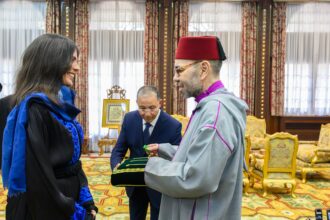
Article : Le Roi Mohammed VI décore Nawal Sfendla du Wissam Al Moukafaa Al Watania de l’ordre d’Officier
Le Souverain a reçu, lundi au palais royal de Rabat et a décoré Mme Nawal Sfendla du Wissam Al Moukafaa Al Watania de l’ordre d’Officier.

Article : Retraites : la CIMR examinée le 15 juin, mais la réforme attendra sans doute un autre gouvernement
Après la CNSS, la CMR et le RCAR, la commission technique arrive au bout du diagnostic des régimes. Mais entre le calendrier électoral, les désaccords avec les syndicats et les arbitrages encore flous, le chantier ouvert depuis 2003 semble une nouvelle fois rattrapé par le temps politique. Round up.

Article : Mondial 2026 : beIN Sports promet plus de 17 heures de direct par jour
Le diffuseur proposera en direct les 104 matchs de la compétition dans la région MENA, dont le Maroc, du 11 juin au 19 juillet. Six chaînes MAX, une couverture en arabe, français et anglais, ainsi que 18 reporters déployés en Amérique du Nord doivent accompagner cette édition élargie à 48 équipes.
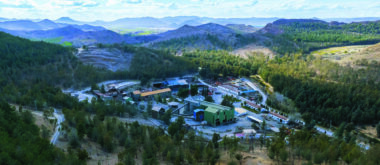
Article : CMT : Tighza, la mine presque centenaire qui vaut encore de l’or
Depuis le début de 2026, l’action de la Compagnie minière de Touissit a presque triplé, portée par la bonne tenue du plomb, du zinc et de l’argent. À Mrirt, le site de Tighza continue d’extraire, d’explorer et de s’étendre, avec 357.470 tonnes de minerai produites en 2025 et un cinquième puits appelé à renforcer les volumes. CMT regarde désormais au-delà de son actif historique, avec des projets dans le cuivre, le graphite et l’antimoine.
Article : L'image comme arme : coordination visuelle et mèmes dans la guerre narrative autour de l'OTAN (4/4)
Ce quatrième et dernier volet de la série consacrée à 62 jours de surveillance du débat anglophone sur Twitter/X autour de l'OTAN et de la crise iranienne est consacré à l'analyse de l'image. Le diagnostic textuel est incomplet, les narratifs les plus actifs visuellement sont invisibles aux outils standards. Ce que les trois volets précédents ont cartographié dans le texte, ce volet le cartographie dans l'image.