
Grand Stade Hassan II vs Bernabéu: the duel for the 2030 World Cup final
As FIFA’s decisions on the allocation of matches for the World Cup co‑hosted by Morocco, Spain, and Portugal approach, Spanish media echo mounting nervousness among Iberian football authorities, fueled by unsubstantiated speculation over a possible intervention by Donald Trump in favor of the Kingdom.
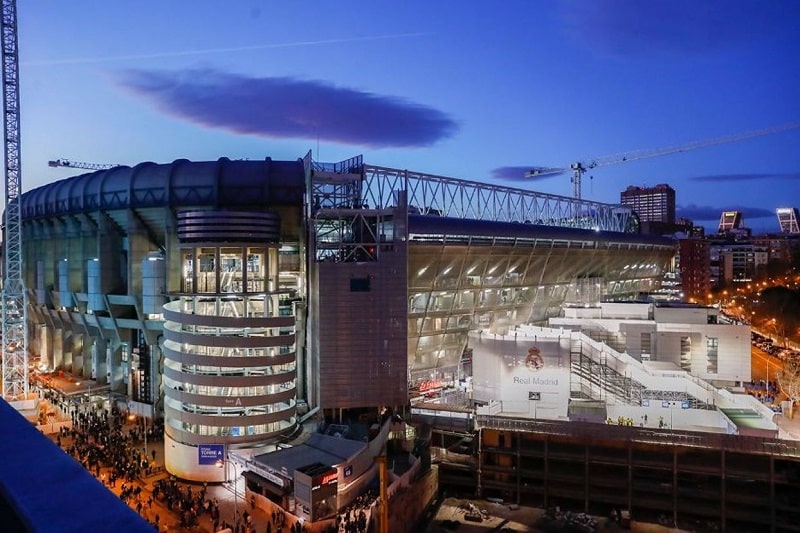
While the Royal Spanish Football Federation (RFEF) continues to officially express its confidence, the allocation of the 2030 World Cup final is igniting an increasingly heated debate across the Strait of Gibraltar.
On July 7, 2026, during El Partidazo on COPE radio, journalist Juanma Castaño relayed concerns circulating within certain circles of Spanish football. They fear that Donald Trump could intervene in favor of Morocco in the selection of the host nation for the tournament's final — the sport's most prestigious match.
At this stage, such fears are not grounded in any public position taken by the American president regarding the 2030 World Cup. They instead trace back to a precedent from the 2026 edition, widely covered in Spain.
The Iberian press recalls the case of Folarin Balogun: after the American forward was excluded against Bosnia‑Herzegovina, Donald Trump publicly admitted to asking FIFA to review the decision. The federation subsequently suspended the sanction, allowing the player to feature in the round of 16 against Belgium.
This unusual episode raised questions about the independence of FIFA’s disciplinary procedures, as reported at the time. Yet it remained an isolated incident — unrelated to the choice of the 2030 final venue, which will be determined by broader criteria including sporting, operational, commercial, and security considerations.
The Rabat-Washington Axis from Spain's Perspective
Beyond this precedent lies a geopolitical interpretation of the issue. Some Spanish commentators emphasize the longstanding partnership between Rabat and Washington, as well as the occasionally strained relations Madrid has experienced with certain Republican administrations.
In this analysis, the ties between Morocco and the United States could lead Washington to view Casablanca's candidacy favorably. However, no American authority has publicly expressed such a preference.
Diplomatic proximity between two countries alone does not determine the outcome of a competition under FIFA's authority. Within the Spanish debate, it mainly serves as a political backdrop to a rivalry driven above all by the quality of the projects presented.
Madrid and Casablanca Showcase Their Ambitions
This competition has been openly discussed in the columns of Politico. Interviewed during a 2026 World Cup match, Rafael Louzán, president of the RFEF since late 2024, expressed his belief that the decisive match would be held in Madrid or Barcelona.
“Spain is leading this World Cup,” he stated, noting that his country offers eleven host cities, compared to six for Morocco and three for Portugal.
This argument, however, is not entirely valid. On one hand, Spain was compelled to do so by its regional structure. On the other, the distribution lacks coherence, as it does not follow a logical pattern for group matches and increases travel distances for participating teams.
The president’s confidence reflects Spain’s position in a competition that remains open — no stadium has yet been officially designated to host the final.
Meanwhile, Morocco harbors the same ambition. A senior official from the Royal Moroccan Football Federation confirmed to Politico the Kingdom’s desire to host the tournament’s most prestigious match.
Morocco’s main asset is the future Grand Stade Hassan II, under construction near Casablanca. Designed to accommodate 115,000 spectators, the stadium is set to become a symbol of the country’s vast investment program in sports infrastructure, transportation, and accommodation.
Its capacity and design, tailored for major competitions, place Casablanca among the strongest candidates. Yet Spain can counter this project with the prestige of the renovated Santiago Bernabéu and Camp Nou, both deeply rooted in global football history.
Feijóo Shifts the Debate to the Political Arena
The sporting rivalry has gradually spilled into Spanish domestic politics. In an interview with The Objective, Popular Party leader Alberto Núñez Feijóo accused Prime Minister Pedro Sánchez of “negotiating” the final with Morocco, allegedly to the detriment of Spain’s interests.
Media reports claim that Madrid implicitly gave up hosting the match, while Rabat had already secured crucial backing from Donald Trump, Qatar, and Saudi Arabia.
Yet there is no concrete evidence, verified testimony, or official statement to support such an agreement. The hypothesis appears rooted more in the Spanish political confrontation over Pedro Sánchez’s relations with Morocco.
Nevertheless, it has triggered numerous reactions — particularly on social media, where some users have even floated the idea of Spain withdrawing from the joint bid if the final were awarded elsewhere.
For now, Spain has not withdrawn from the tournament or its ambition to host the showpiece event. Morocco has likewise received no official assurance that Casablanca will be chosen. Both countries continue to defend their venues within a joint project with Portugal.
This internal competition does not undermine the tripartite bid’s principle; rather, it underscores the symbolic, economic, and diplomatic weight attached to the centenary World Cup final.
Morocco has tangible arguments to bolster its claim — a 115,000‑seat stadium, major investments, and the prospect of offering the African continent its second World Cup final. These strengths place Casablanca at the forefront of the race, without resorting to geopolitical arrangements that remain unsubstantiated.
The decision ultimately rests with FIFA. Until the official announcement, Madrid, Barcelona, and Casablanca remain contenders.

à lire aussi
Article : Le Maroc prévoit 60.000 lits hôteliers supplémentaires d’ici 2030
Le Royaume prévoit d’ajouter 60.000 lits hôteliers d’ici à la Coupe du monde 2030, portant sa capacité d’accueil à plus de 360.000 lits. Le gouvernement accélère les investissements dans les infrastructures et vise 26 millions de touristes à l’horizon 2030.

Article : Prévisions météorologiques pour le mercredi 22 juillet 2026
Voici les prévisions météorologiques établies par la Direction générale de la météorologie : - Temps chaud à localement très chaud sur le nord de l’Oriental, […]
Article : ONU : le Sénégal soutient officiellement la candidature de Macky Sall au poste de secrétaire général
Le Sénégal a décidé de soutenir officiellement la candidature de l'ancien président Macky Sall au poste de secrétaire général de l'Organisation des Nations Unies, une décision accompagnée d'une mobilisation du gouvernement et du réseau diplomatique sénégalais auprès des États membres de l'ONU.
Article : Novembre 1980, le soir où 70.000 Casablancais exigèrent de voir Keegan
Mort le 20 juillet 2026 à 75 ans, Kevin Keegan avait marqué les esprits jusqu’au Maroc. En novembre 1980, blessée et d’abord absente, la star anglaise fut rappelée de son hôtel pour affronter le Raja devant un Stade d’Honneur en ébullition.
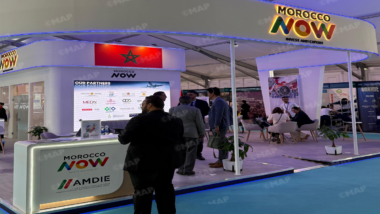
Article : À Farnborough 2026, le Maroc présente ses atouts aéronautiques
Avec un pavillon réunissant l’AMDIE, le GIMAS, l’IMA, des industriels et des start-up, le Royaume cherche à attirer de nouveaux investissements, notamment dans les moteurs et les trains d’atterrissage.

Article : Mardi 21 juillet 2026 : le dirham se déprécie face au dollar
Ce mardi 21 juillet 2026, vers 8 h 30, la première cotation centrale USD/MAD de la journée, telle que publiée par Bank Al-Maghrib (BAM), fait […]