
Congressman Joe Wilson to Médias24: “Putting the Polisario on the terrorist list will help establish peace”
INTERVIEW. A key promoter in the U.S. Congress of the bill to classify the Polisario as a terrorist organization, Republican Representative Joe Wilson of South Carolina believes the initiative could help bring Morocco and Algeria closer together, while limiting the influence of Iran and Russia in the region.
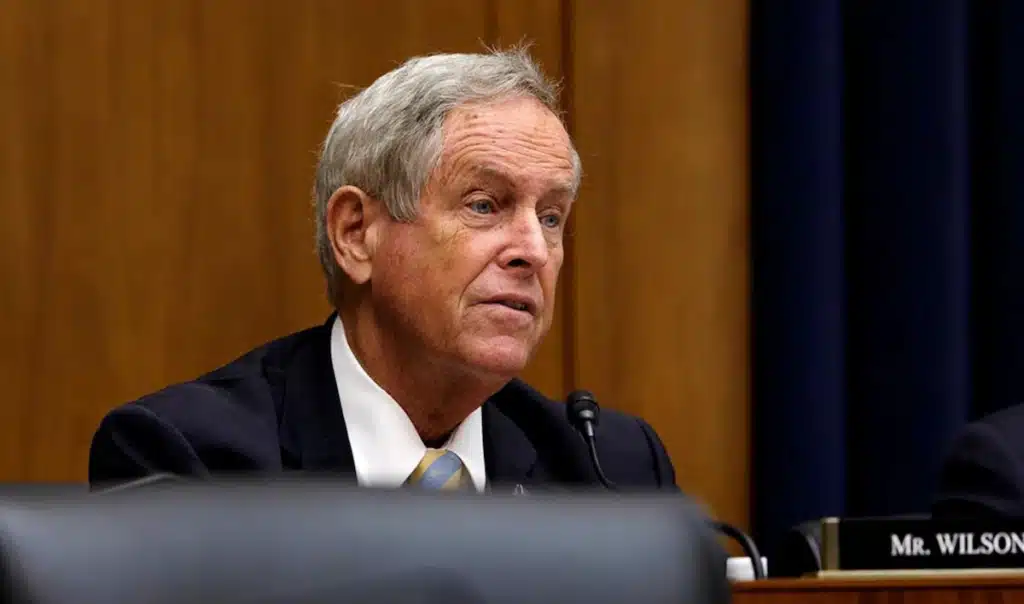
Introduced into the U.S. legislative process on June 24, 2025, bill H.R. 4119 — which seeks to designate the separatist Polisario movement as a terrorist organization — continues to gain support among members of Congress. The latest to join was Representative Don Bacon.
According to the official website of the U.S. Congress, the Republican from Nebraska’s second district added his name on March 3, 2026, to a list of eight cosponsors already including Jimmy Panetta (Democrat, California), Mario Diaz-Balart (Republican, Florida), Jefferson Shreve (Republican, Indiana), Randy Fine (Republican, Florida), Lance Gooden (Republican, Texas), Pat Harrigan (Republican, North Carolina), and Zachary Nunn (Republican, Iowa). Joe Wilson, the driving force behind the bill, remains its chief sponsor.
Joe Wilson at the forefront
A member of the House of Representatives since December 2001, representing South Carolina’s 2nd district for the Republican Party, Addison Graves Wilson Sr. — his full name — is currently the worst nightmare of the Algerian-Polisario front within the halls of the U.S. Congress.
He first came under scrutiny from Algeria when, in May 2013, he took part in launching the Congressional Morocco Caucus — an informal bipartisan group in Congress that he has co-chaired ever since and which aims to promote and strengthen U.S.–Morocco relations. However, his introduction of bill H.R. 4119 has made him an even more frequent target of the Algerian propaganda machine.
Paradoxically, as Médias24 notes from its exchange with him, Joe Wilson does not harbor anti‑Algerian sentiments. On the contrary, he hopes that Algeria, like Morocco, will one day strengthen its ties with Washington. "Designating the Polisario will assist President Trump's efforts to make peace between Morocco and Algeria — moving Algeria towards the U.S. and away from [Russian President Vladimir] Putin," he told us.
Joe Wilson’s observation on this point is unequivocal. "The Polisario's campaign against the Kingdom of Morocco have created an opening that is being exploited by malign actors like Russia and Iran," he insists. In his own words, he has taken on the mission of "championing the issue countering Russia and Iran and their proxies around the world including in North Africa."
This argument was already reflected, to some extent, in bill H.R. 4119. Naturally, the text had to rely on verifiable facts to gain support at the congressional level — which is precisely what is happening now.
The crux of the matter: Iran
As for Russia, the text addresses the issue only briefly. It stipulates that, within 180 days of the law’s entry into force, the Secretary of State must submit to the appropriate congressional committees a report on the Polisario, including details of its relations, support, funding, and ties with Moscow. By contrast, it goes into far greater detail about the shady Polisario-Iran connections, dating back to the so-called "Islamic Revolution" of 1979.
"The Polisario Front has a documented history of ideological and operational ties with Iran, a state sponsor of terrorism, dating back at least to 1980, when Polisario fighters publicly posed with portraits of Ayatollah Ruhollah Khomeini in a bid to attract revolutionary credibility and Iranian patronage," the bill recalls. At the time, this fact was thoroughly documented by the American news agency AP.
In recent years, the bill notes, the Polisario has hosted Hezbollah instructors at its rear base in Tindouf, Algeria — one of the reasons why Rabat eventually decided, in May 2018, to break with Tehran, an open secret that the Lebanese Shiite organization is merely a front. Particularly striking is the case of one instructor, Ali Musa Daqduq. Though not mentioned in Joe Wilson’s bill, he had previously targeted U.S. interests by helping plan the January 20, 2007 attack on the Karbala coordination center in Iraq, which killed five American soldiers.
Furthermore, bill H.R. 4119 highlights threats issued in September 2022 by the Polisario’s self‑styled "Interior Minister," Omar Mansour, who vowed to use Iranian drones. It also points to the movement’s involvement — reported by The Washington Post on April 12, 2025 — in the Syrian battlefield alongside other pro‑Iranian militias. Taken together, these elements suggest a clear intention on the part of Iran’s mullahs to turn the Polisario into the "Houthis of West Africa," as Senator Ted Cruz warned in Congress on February 3, 2026.
By the way, Ted Cruz did not merely draw a casual comparison with the Houthis. He also justified his analogy by explaining how Iran intends to use the Polisario as "a a proxy force capable of waging war to threaten regional stability and pressure U.S. partners whenever Iran wants leverage."
"The Polisario Front works with Iranian terrorist groups. It takes drones from the Islamic Revolutionary Guard Corps. It moves weapons and resources around the region, including to jihadists, and much more," the Republican politician elaborated. He reiterated this statement the following day on a podcast, reaffirming his readiness to submit another bill to the Senate to designate the Polisario "if there is no change in their behavior."
A politically motivated initiative
In his exchange with Médias24, Joe Wilson confided that, for now, while still working to have his bill examined by the relevant congressional committees, he nonetheless hopes the ongoing negotiations — conducted under the dual auspices of the United Nations and the United States and based on Morocco’s autonomy plan — will succeed. This, he explains, is the true purpose of his initiative.
"In addition to helping President Trump's efforts to establish peace and normalization between Morocco and Algeria, this bill will also help move along the UN process for the Sahrawi people in achieving autonomy as part of the Kingdom of Morocco," he insists. He emphasizes that, in his view, "it is not in the best interests of the Sahrawi people to create a country in the middle of the Sahara Desert," adding that such a move "is only a recipe for further destabilization."
But will Algiers and the Polisario see it this way?

à lire aussi

Article : Maroc-Canada : Ouahbi assume le statut de “prétendant”, Marsch refuse de réduire le match au 3-0
Après la qualification marocaine pour les quarts, les deux sélectionneurs ont livré deux lectures opposées du huitième de finale : côté marocain, la maîtrise retrouvée après la pause et l’ambition d’aller plus loin ; côté canadien, le sentiment d’avoir dominé longtemps avant de céder sur les détails.
Article : Coupe du monde 2026. Le Maroc en quart pour la deuxième fois de son histoire (3-0)
Après un premier acte tendu et angoissant, l’équipe nationale s’est difficilement sortie du piège tendu par les Canadiens grâce à un doublé d’Azzedine Ounahi et une réalisation signée Soufiane Rahimi, ce samedi 4 juillet à Houston. Le Maroc affrontera en quart, jeudi 9 juillet, le vainqueur du huitième opposant, la France au Paraguay.
Article : Croisières : Celestyal ajoute Casablanca et Tanger à ses itinéraires d’hiver
Le programme “Mediterranean Odyssey” prévoit deux départs de Barcelone, les 5 et 19 décembre 2026, pour un circuit de 14 nuits à bord du Discovery, entre Malaga, Gibraltar, Cadix, Lisbonne, Valence, Palma de Majorque et Sète.
Article : Maroc-Allemagne : avant son 30e anniversaire, l’AHK renouvelle ses instances
À Casablanca, l’assemblée générale du 29 juin a confirmé Mehdi El Boury à la présidence de la Chambre. La direction générale passe, depuis le 1er juillet, de Katharina Felgenhauer à Silke Kunstreich, tandis que l’ancien président Mazen Sowan est nommé président d’honneur.
Article : Jeunesse : coup d’envoi des colonies de vacances 2026 à Bouznika
Organisée sous le thème “Les colonies éducatives, une nouvelle vision pour construire la vie”, l’édition 2026 du programme national de camping doit bénéficier à 210.000 enfants et jeunes, avec un dispositif élargi aux séjours fixes, de proximité, thématiques et itinérants.
Article : Maroc-Canada : Ouahbi reconduit son onze-type, Halhal remplace Riad en défense
À Houston, les Lions de l’Atlas s’appuieront sur leurs cadres pour tenter de poursuivre leur parcours face au pays coorganisateur.