
National team. So close to happiness (CAN 2025)
The national team, led by Walid Regragui, missed the final. Yet the Lions of the Atlas make you want to see them again. And although the tournament did not end as hoped, the Kingdom succeeded at the Africa Cup of Nations — a good sign for 2030.
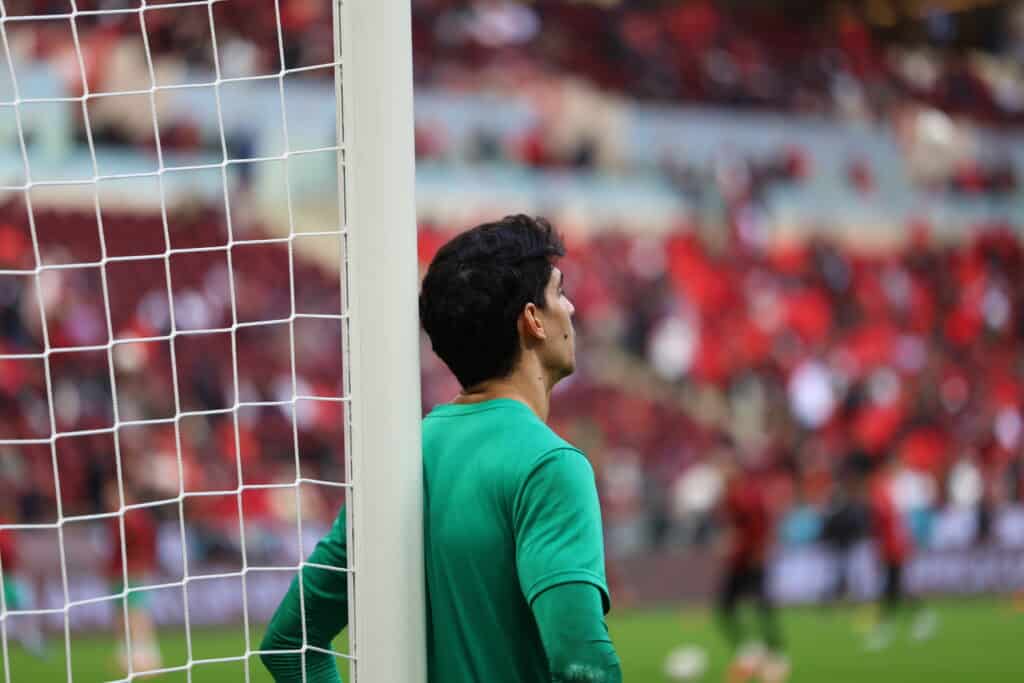
Sunday, January 18, 2026, was meant to be a dream. Instead, it will remain etched in our memories — filed under nightmares.
It must be said that, emotionally, we were not caught off guard. Since 2004, we have known the difference between losers and winners in a final — the gap between players and heroes. Between a deep collective pride, hard to wrest from defeat, and the choice to be content with everything else.
The highest continental peak reached by the national team in more than twenty years thus merged with the deepest of disappointments.
This is the second final lost by the Lions of the Atlas, after the 2004 AFCON. A new setback that ushers in an era of nuance.
It is the best result for a Moroccan side in a home AFCON final tournament, after the semi-final elimination against Cameroon in 1988. And reaching the final is a fine achievement. But it was a bitter way to lose.
In reality, the national team players have little to regret. Their coach, Walid Regragui, probably has more to answer for.
The national team left great memories
It is true that the national team’s journey shows clear progress compared to the last edition, and to that of 1988.
The national team went beyond the round of 16 and carried the pressure of host-nation status all the way to the end — a burden Cameroon had lifted from them back in 1988.
They came through the tricky round of 16 against Tanzania unscathed. They overcame a vengeful Cameroon. They knocked out Nigeria, one of the tournament favorites. In short, they left lasting memories.
But they lacked a bit of freshness, a touch of luck, and above all, the serenity needed in the final minutes of the match.
Especially at the moment when Brahim Diaz thought more about the impact of winning AFCON with a panenka than about simply securing victory.
Let’s not fool ourselves: in situations where selfishness outweighs the collective interest, optimism counts for little.
But it is evident that Moroccan football has a future as bright as the recent past of its different categories.
And this, even if the value of this run remains below that of 2004, when talent and popular support were far less.
During this AFCON, the national team seldom lived up to expectations on the pitch. Yet they still occupy a distinguished place in Moroccan football history.
Walid Regragui does not come out strengthened from this AFCON
Reaching the final despite so many flaws reveals a profound merit and a genuine collective effort.
The question remains whether this result is enough to keep Walid Regragui in charge. History shows that winning a final grants impunity — but does losing invite reproach?
The coach weathered violent storms in the build‑up to the competition, fewer during its course. Yet he emerges from this AFCON no stronger than before.
Had victory come, his mandate would have continued serenely, at least until the 2026 World Cup in North America (United States, Canada, Mexico). But victory never came.
The wins over Cameroon — and above all Nigeria — bolstered the belief that Walid Regragui had both direction and method.
An impression likely overstated, given his constant contradictions and the instability of his game plan.
How can one explain, for example, that apart from Ayoub El Kaabi, no center‑forward scored during the competition?
This strength from the bench was arguably what Morocco lacked most in this AFCON — as much as coherence.
The question arises as to why the Moroccan coach, ever since the round‑of‑16 elimination in the previous edition, worked to build a possession‑based team — only to abandon that approach from the quarter‑finals of the 2025 AFCON.
Indeed, from the match against Tanzania onward, Morocco consistently had less possession than their opponents.
A squad of 26, far from its best
Difficult, under such conditions, to harness the extraordinary offensive talent this team possesses — more than any previous generation.
And above all, how to reconcile the coach’s satisfaction with his bench, when he fielded the same starting eleven from the round of 16 to the final, across four matches in less than two weeks?
The final revived a regret voiced even before the competition began: the call‑up of several injured or out‑of‑form players at the expense of others, perhaps less dazzling but far more competitive.
It would be unfair to deny Walid Regragui his ability to build a team — in clubs as well as with the national side.
Yet too often, that collective strength is built on the altar of individual brilliance, rather than on the chemistry among all the talents that compose it.
In any event, the generation of Achraf Hakimi and Brahim Diaz will face Brazil in six months, in the opening match of Group C at the 2026 World Cup. They will strive to ensure that the feat of 2022 does not fade into a mere memory.
There is no doubt that, from the March friendlies, the Atlas Lions will reunite with joy. They will remember that the adventure of this AFCON was not, after all, so catastrophic.
Above all, because of their ability to unite and to foster an atmosphere charged with hope and ambition — an atmosphere in which the belief that anything was possible truly took root.
An organization with little room for improvisation
The organization and the surge of popular enthusiasm left a lasting impression. Though not every one of the 51 matches was played in a full stadium, the vast majority were.
Fan zones brimmed with supporters, and despite occasional setbacks, the quality of the base camps and pitches helped sustain the festive spirit of the competition.
Improvisation was almost absent — save for a final that resembled a parachute jump more than an emotional rollercoaster.
The events that marked the most important match of Africa’s biggest competition will leave a lasting imprint on collective memory. They will also fuel the discourse of those who argue it was not the greatest edition in history.
But the financial and human investments, together with the warm welcome of the Moroccan people, confirmed instead that the Kingdom is a football nation — endowed with the expertise and the assets needed to host the 2030 World Cup in four years’ time.
Meanwhile, we would have loved the celebration to last until dawn. Yet to live the final day of such a competition as a day of grandeur will remain, all the same, a privilege.

à lire aussi
Article : Achats par IA : Oliver Jenkyn, président de Visa, esquisse les ruptures du paiement et du commerce du futur
Le président du groupe Visa a ouvert la journée médias du Payments Forum 2026, à Paris. Lors de son intervention, il a dessiné les contours de ce que sera, selon lui, le commerce des prochaines années : des agents qui achètent à notre place, des stablecoins encore balbutiants, et une confiance qui devient la seule monnaie qui compte vraiment.

Article : Coupe du monde 2026. Physiquement, le Maroc est au point
Courses à haute intensité, sprints, distances parcourues… Signes d’une préparation physique réussie, les Lions de l’Atlas ont été énormes dans la générosité tout au long de la compétition. Ismael Saibari, Neil El Aynaoui et Achraf Hakimi sont les porte-étendards d’une équipe au rendez-vous sur le plan athlétique.
Article : Commission d'enquête sur le soutien à l'élevage : réunions reportées, tensions politiques et accusations de récupération
Elle devait se tenir ce lundi 29, puis le mardi 30 juin, puis mercredi 1er juillet. Finalement, la réunion préparatoire à la mise en place de la commission d'enquête sur le soutien à l'élevage n'a pas eu lieu. Derrière ces reports successifs, les agendas des différents groupes parlementaires sont avancés par certains médias de la place. Mais en coulisses, le dossier semble prendre une tournure politique.

Article : ReliX, le nouveau référentiel marocain pour moderniser la maintenance industrielle
Lancé le jeudi 2 juillet par le Cluster Maintenance 4.0, le dispositif s'appuie sur la méthode Hexagon, un modèle de maturité en cinq niveaux et sept principes, avec l'ambition de structurer un réseau d'experts à vocation africaine autour de la fiabilité, du numérique et de la durabilité.
Article : Marché actions, minières, HPS : ce que recommandent les analystes de la place
Au-delà du bilan des sociétés cotées, la 7ᵉ édition de la conférence "Résultats et perspectives" a été l'occasion pour trois bureaux de recherche de partager leurs scénarios d'investissement. BMCE Capital voit les fondamentaux du marché rester favorables malgré la correction, MSIN passe en revue les perspectives de Managem et SMI, tandis que CFG Bank recommande HPS à l'achat avec un cours cible de 781 DH.
Article : Bourse de Casablanca. Le MASI termine en hausse
La Bourse de Casablanca a terminé la séance du 2 juillet en hausse. Le MASI gagne 0,98%, porté notamment par Minière Touissit, SMI et Managem, sur un volume de 268,4 MDH.