
Economic Outlook: Strengths of 2025, Risks to Watch in 2026
By the end of 2025, Morocco’s economy ends the year with solid growth and inflation at a record low. Momentum is being sustained by domestic demand and, above all, public investment. Looking ahead to 2026, risks to watch include drought, the labor market and export performance.
By late November 2025, Morocco’s economy is delivering a performance rarely seen in recent years.
On one hand, growth remains strong, fueled by both agricultural and non-agricultural activity — an unusual combination after several seasons of drought.
Domestic demand remains the main driver, with investment particularly dynamic in the public sector and inflation at its lowest in years.
With 2025 ending and 2026 just ahead, it is important to identify what is sustainably supporting the economy, what reflects a favorable context, and the risks that could quickly reverse the trend.
Positive Indicators
Growth in Morocco is robust. It is expected to be around 5% or more.
That would mark the fastest real pace since 2017, when the economy expanded by 5.1%, excluding the post-Covid rebound. If that threshold is surpassed, growth would reach its highest level since 2009, when it stood at 6%.
In Q2 2025, the GDP in volume rose 5.5% year-on-year, after 4.8% in the previous quarter, bringing first-half growth to 5.2%.
The momentum was fueled by agricultural value added, up 4.7%, and non-agricultural value added, up 5.5%.
Growth is therefore driven mainly by internal factors, rather than by external demand.
Beyond real growth, nominal growth remains crucial as it shapes key macroeconomic indicators. In 2024, nominal growth reached 7.9%, combining a real increase of 3.8% with a deflator of 4.2%, while inflation stood at 0.9%.
In a scenario of about 5% real growth in 2025 and an average deflator near 3%, nominal growth would come in around 8%, mechanically boosting several ratios, including the budget deficit, debt, the current account deficit and fiscal pressure.
Inflation fell to its lowest level in five years in November, with the CPI standing at -0.3% year-on-year, putting the economy in deflation. It is the weakest rate since December 2020.
More importantly for macroeconomic analysis, core inflation is at -0.9% year-on-year.
Regarding external trade, while the goods deficit is widening, services, tourism, transfers and FDI are strengthening financing capacity, playing a growing role in the external balance.
On energy prices, the outlook appears favorable. Oil prices have dropped below $60 per barrel, their lowest level since February 2021. The market is evolving in a context of oversupply, and projections point to a generally stable price in 2026. For example, JP Morgan anticipates an average price of $58 per barrel in 2026.
In the same vein, the energy bill fell to 90 billion MAD by end-October 2025, down 4.4% year-on-year. This eased the external shock and reduced a major source of volatility.
Lastly, the "exchange rate and imported inflation" channel is working in favor in 2025, offering one of the discreet explanations for disinflation. According to HCP’s economic analysis, the dirham is expected to end 2025 up 1.8% against the euro and 7.7% against the dollar.
This appreciation lowers the cost in dirhams of some dollar-denominated imports, including energy, helping reduce imported prices and reinforcing price stability in the domestic market.
At the time of publication, foreign exchange reserves stood at 433.8 billion MAD.
Risks
The first risk is drought, which affects both agricultural activity and food prices. Although agricultural value added is expected to perform well in 2025, Morocco’s history shows this driver is volatile, and a shock could push food prices higher and disrupt part of the 2026 growth forecast.
The second risk is employment and the quality of youth integration. The challenge is not only cyclical but also structural. Even in periods of strong growth, job creation is insufficient, and when jobs are created, a significant share takes the form of underemployment.
A further risk stems from automation and AI, which can raise barriers to entry in the labor market, especially for first-time job seekers, by cutting back the most routine entry-level positions.
The third risk is external constraints. In Q2 2025, external trade already made a negative contribution to growth, with imports rising faster than exports. As long as tourism and FDI offset the gap, the system holds, but if one of these buffers weakens, the constraint will weigh more heavily again.
The fourth risk is sectoral but macro in its effects: the performance of key industrial exports. Data from the Office of Foreign Exchange indicate a decline in automotive exports at end-October 2025.
As this sector weighs heavily on exports, any problem with European demand, competitiveness or the value chain quickly spills over to growth, employment and the current account.
The fifth issue is growth relays. In 2025, much of the momentum comes from public investment. This driver is strong, but it can mechanically slow as major projects normalize.
The risk is that this momentum proves only a peak of activity, without lasting impact, and that the economy fails to shift to more autonomous engines, focused on exports and job creation. The issue is expected to arise from 2028‑2029 onwards.
International Environment
The international context is a factor to consider; it is not just "what happens elsewhere" but an immediate transmission channel.
In Q3 2025, eurozone growth remained weak, with GDP up 1.4% year‑on‑year, versus 1.6% for the EU. Beneath the average, sharp heterogeneity is emerging.
Germany remained stagnant, with zero growth (0%), while France posted 0.5% according to Insee. Private consumption in France was almost flat at 0.1%.
By the end of Q3 2025, inflation in the eurozone stood at 2.2%, with 1.1% in France, 2.4% in Germany, 3.0% in Spain.
In 2026, the outlook is little changed from 2025. The European Commission forecasts growth of 1.4% in the EU and 1.2% in the eurozone, with inflation expected at 2.1% in the EU and 1.9% in the eurozone.
Regarding U.S. growth, the Fed projects real GDP of 1.7% in 2025 and 2.3% in 2026. Inflation is seen at 2.9% at end-2025, easing to 2.4% in 2026.
For Morocco, these figures matter as they shape imported price pressures. Higher U.S. inflation than in Europe tends to keep dollar and interest‑rate constraints tighter, raising the risk of costlier and more volatile external financing.

à lire aussi

Article : Bilan de fin de saison. Fortunes diverses, mais dynamique positive pour les internationaux marocains
Alors que la majorité des championnats touchent à leur fin, les internationaux marocains ont pour la plupart signé des saisons de haute volée. Un constat qui s’applique également à ceux qui n’ont rien gagné, mais dont les prestations ont été unanimement saluées. De bon augure en perspective du Mondial 2026.

Article : Criquets pèlerins aux portes du Souss : quel risque pour l'agriculture ?
Ils sont jaunes, parfois rosâtres, et inquiètent les agriculteurs du Souss. Des criquets pèlerins ont été observés à proximité des champs agricoles de Chtouka Aït Baha. Voici ce qu'il faut savoir sur la situation.

Article : En 2025, l’aggravation du déficit extérieur en biens et services retire 3,8 points à la croissance
Au-delà de la sécheresse, la croissance au Maroc est aussi affaiblie par une fuite importante de la demande vers les importations. En 2024, le solde extérieur a retiré 2,5 points à la croissance. En 2025, selon nos calculs, cette perte atteint 3,8 points. Une partie de l’effort d’investissement et de consommation se transforme ainsi en production étrangère, plutôt qu’en valeur ajoutée locale.

Article : Et si on regardait la Bourse de Casablanca hors minières ? Ce que les minières changent dans la lecture du marché
Avec plus de 11% du MASI et une contribution de +656 points de base depuis le début de l’année, les minières prennent une place centrale dans les mouvements de la Bourse de Casablanca.
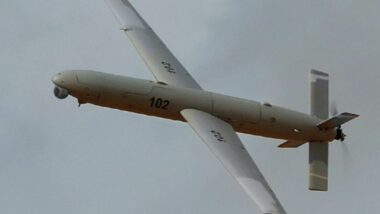
Article : SkyStriker : le drone “précis, silencieux et mortel” rejoint l’arsenal des FAR
Précis, silencieux et dopé à l'intelligence artificielle, ce nouveau vecteur de frappe à bas coût renforce considérablement la résilience et la réactivité du dispositif de défense marocain.

Article : GST Rabat-Salé-Kénitra : un budget de 1,8 milliard de DH en 2026, le CHU Ibn Sina au cœur des investissements
Un budget 2026 estimé à plus de 1,8 milliard de DH traduisant l’ampleur des investissements engagés dans la région Rabat-Salé-Kénitra, un démarrage progressif du CHU Ibn Sina prévu en deux phases avec une montée en charge, et une feuille de route sanitaire qui vise à réduire les disparités territoriales et à renforcer l’offre de soins.