
Sahara, Mont Tropic, FIR: the new power dynamics between Rabat and Madrid
A recent legal study published in Spain backs the Kingdom's position: applying the principle of equity, managing Sahara airspace and pursuing pragmatic cooperation on deep‑sea mineral resources now stand as the only viable path for bilateral relations.
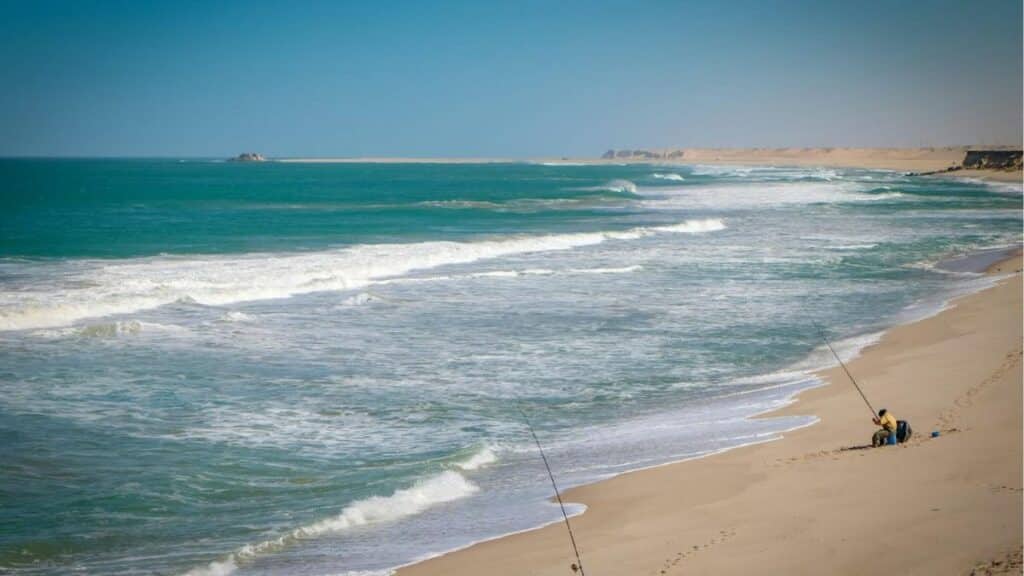
This reading of maritime law resonates as a victory for Moroccan diplomacy. The Kingdom set out its maritime domain in 2020 with laws 37-17 and 38-17, extending jurisdiction over the waters of its Southern provinces. International experts — including those in neighboring Spain, as highlighted by Atalayar media —acknowledge the strength of Rabat's arguments.
The maritime boundary "in fact" rather than "in law" currently separates the Canary Islands from the African continent — inherited from ancient practice rather than a formal agreement — does not withstand analysis under the United Nations Convention on the Law of the Sea (UNCLOS).
The end of the automatic median line
The heart of the legal debate lies in the methodology of delimitation. For decades, one interpretation sought to impose the idea of a strict median line, drawn equidistant between the Canary Islands and the Moroccan coast. That approach is now legally outdated. Contemporary international law, backed by jurisprudence, enshrines the "principle of equity" when particular geographical circumstances demand it.
Morocco advances an irrefutable argument: a major geomorphological asymmetry between the two sides. On one hand, the Kingdom boasts a continuous continental shelf stretching more than 3,500 kilometers; on the other, Spain holds an archipelago that, under UNCLOS, does not qualify as an "archipelagic state". Applying mechanical equidistance would equate the legal weight of a few islands with that of an entire continent, creating a disproportionate distortion to Morocco’s detriment.
This geographical and ecological continuity is formally recognized by international bodies. The UN Food and Agriculture Organization (FAO) classifies fishing zone 34.1.1 as “Moroccan coast,” a stretch running uninterrupted from Tangier to Cape Boujdour. That technical reality reinforces Rabat’s political position: the Kingdom’s territorial integrity does not fragment at sea.
Mount Tropic: cooperation forced by geology
Beyond the surface, the stakes crystallize around the deep seabed. The focus is Mount Tropic. Current technology makes exploitation unlikely for two or three decades. This underwater volcano lies about 1,000 meters deep, with deposits plunging to 4,000 meters. It has drawn interest for reserves of tellurium and cobalt — minerals critical to the global energy transition.
However, the geographical position of this underwater mount imposes a reality Madrid cannot ignore. It lies beyond 200 nautical miles. The area is a convergence zone where both countries' claims to extend the continental shelf overlap. Mount Tropic cannot be unilaterally appropriated.
International law, through Article 83.3 of the Montego Bay Convention, offers a way out. It allows the creation of a Joint Development Zone (JDZ). The framework freezes the sovereignty dispute over the seabed and permits shared exploration and exploitation.
For Spain, which filed a request to extend its continental shelf to the UN Commission in 2014, agreement with Morocco is vital. Without an accord, Moroccan objections are enough to block the examination of the Spanish dossier in New York. The key to Tropic's treasure lies as much in Rabat as in Madrid.
Airspace: sovereignty cannot be divided
The other major issue, often treated with excessive diplomatic caution, is the airspace above the Sahara. For technical reasons, management of this Flight Information Region (FIR) was historically handled from the Canary Islands control center. That anomaly is now set to disappear.
UN Security Council Resolution 2797 has changed the landscape. By endorsing the autonomy plan as the only credible solution and recognizing Morocco's sovereignty dynamic, the UN provides a legal basis for transferring responsibilities. Morocco already exercises full airport sovereignty on the ground, managing civilian and military traffic from the airports of Laâyoune and Dakhla. It is now entitled to regain control of its airspace.
It is no longer a question of whether this transfer will happen, but how. Experts call for a technical roadmap to guarantee an orderly transition. The process should follow ICAO (International Civil Aviation Organization) standards, finally aligning the aeronautical map with the Kingdom's political map.
This interpretation of the law outlines the contours of a future comprehensive agreement. Morocco is not a petitioner but an indispensable partner with inalienable rights. By integrating these maritime and aerial issues into the Royal Atlantic Vision — backed by projects such as the Dakhla Atlantic port and the Nigeria-Morocco Gas Pipeline — the Kingdom secures the status of an emerging maritime power.
For Spain, accepting maritime equity and the transfer of air management is not a loss but a gain in legal security. It is the sine qua non condition for ensuring the stability of the Canary Islands and their integration into Africa’s economic dynamic. By endorsing Moroccan theses, Spanish analysts send a clear message to their leaders: on the Atlantic front, security and prosperity now hinge on full recognition of Morocco's sovereignty.

à lire aussi

Article : Criquets pèlerins aux portes du Souss : quel risque pour l'agriculture ?
Ils sont jaunes, parfois rosâtres, et inquiètent les agriculteurs du Souss. Des criquets pèlerins ont été observés à proximité des champs agricoles de Chtouka Aït Baha. Voici ce qu'il faut savoir sur la situation.

Article : En 2025, le déficit commercial retire 3,8 points à la croissance
Au-delà de la sécheresse, la croissance au Maroc est aussi affaiblie par une fuite importante de la demande vers les importations. En 2024, le solde extérieur a retiré 2,5 points à la croissance. En 2025, selon nos calculs, cette perte atteint 3,8 points. Une partie de l’effort d’investissement et de consommation se transforme ainsi en production étrangère, plutôt qu’en valeur ajoutée locale.

Article : Et si on regardait la Bourse de Casablanca hors minières ? Ce que les minières changent dans la lecture du marché
Avec plus de 11% du MASI et une contribution de +656 points de base depuis le début de l’année, les minières prennent une place centrale dans les mouvements de la Bourse de Casablanca.
Article : SkyStriker : le drone “précis, silencieux et mortel” rejoint l’arsenal des FAR
Précis, silencieux et dopé à l'intelligence artificielle, ce nouveau vecteur de frappe à bas coût renforce considérablement la résilience et la réactivité du dispositif de défense marocain.

Article : GST Rabat-Salé-Kénitra : un budget de 1,8 milliard de DH en 2026, le CHU Ibn Sina au cœur des investissements
Un budget 2026 estimé à plus de 1,8 milliard de DH traduisant l’ampleur des investissements engagés dans la région Rabat-Salé-Kénitra, un démarrage progressif du CHU Ibn Sina prévu en deux phases avec une montée en charge, et une feuille de route sanitaire qui vise à réduire les disparités territoriales et à renforcer l’offre de soins.
Article : Transport urbain : Rabat investit plus de 400 millions de DH dans 126 nouveaux bus
Rabat Région Mobilité a attribué un marché de plus de 403 millions de DH pour l’acquisition de 126 nouveaux autobus destinés au transport urbain et périurbain de la capitale. Le groupement composé de Tractafric Véhicules Industriels et Yutong Bus a été retenu pour fournir des bus équipés de systèmes modernes.