
Two IPOs, 6 bln MAD, and a market ready to absorb: “We are entering a new cycle” – Bachir Tazi
Two major IPOs — Cash Plus and SGTM — are coming to market almost simultaneously, raising 6 bln dirhams, the highest level in two decades. Can such volume be absorbed during a correction phase? Médias24 spoke with Bachir Tazi, director of CFG Bank Capital Markets, and other market experts.
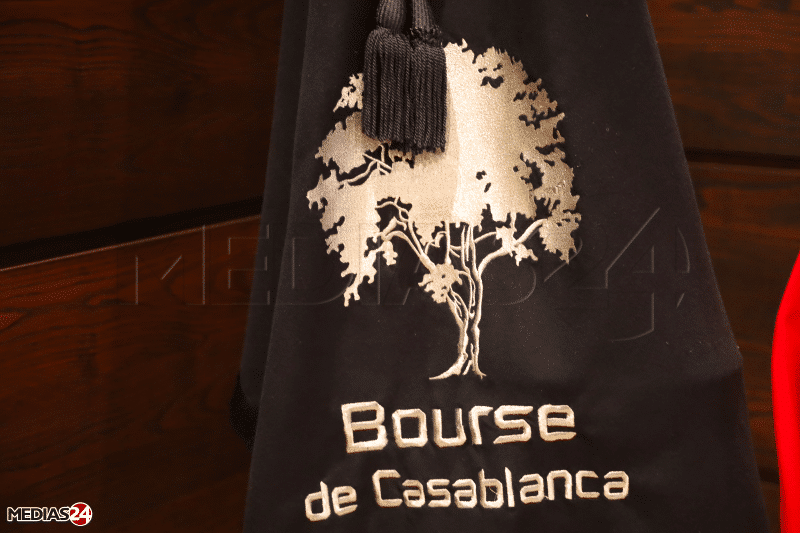
Autumn on the Casablanca bourse looked calm. Then two giants arrived in quick succession — Cash Plus and SGTM — seeking to raise nearly 6 bln dirhams.
It is the biggest fundraising in two decades, a historic moment for the Casablanca Stock Exchange, coming at year‑end during a market correction phase.
Questions arise quickly: Can the Moroccan market absorb two IPOs of this size? At what price? And what will be the impact on liquidity, arbitrage and the MASI’s balance?
To explore these issues, Médias24 spoke with Bachir Tazi, director of CFG Bank Capital Markets, and other analysts.
Putting 6 bln MAD in perspective: a market that has grown deeper
"This may be a first in the history of the Casablanca Stock Exchange, or at least in its recent past. We are seeing two public offerings back‑to‑back, just days apart, and of significant size — nearly 6 bln dirhams," said Bachir Tazi.
"But the 6 bln dirhams must be seen in the new market context. Historically, there were even years without any public offerings. And for a long time, when they did occur, it was at most one a year — sometimes two — but with far more modest amounts."
"Since 2022, market dynamics have shifted. The 6 bln dirhams may look high compared with the ‘old’ Casablanca Stock Exchange, but they must be seen in the context of today’s market. The bourse now has a capitalization of more than 1,000 bln dirhams — over 100 bln dollars."
The float is about 260 bln dirhams. Relating the 6 bln dirhams from the two IPOs to this float gives barely 2.2%. In other words, it is not that large for the market in its current configuration.
"So it is not a large percentage. Especially as we are facing a market whose volumes have surged over the past three to four years. The market traded on average about 50 mln dirhams a day, and now revolves around 450- 500 mln dirhams per session."
Bachir Tazi explains that liquidity has increased tenfold in four to five years. This change is not by chance: it comes with the arrival of larger institutional players. Equity UCITS assets now stand at 83 bln dirhams, and diversified UCITS at 106 bln dirhams. With 40-50% of diversified funds exposed to equities, this represents nearly 50 bln dirhams in additional potential resources.
In addition, bond funds and OMLT funds have about 10% exposure to equities, with total assets of more than 370 bln dirhams. This gives an idea of the combined firepower of these professional players. And that is without mentioning the weight of traditional institutional investors — pension funds, insurers, or foreign investors.
"The new element in this market is the rise of another player: retail investors, now far more active in both transactions and overall liquidity."
"This element should not be underestimated, and is evident in the latest figures. Today, retail investors account for around 28% of total market volume, according to the latest available statistics. This is significant and underscores the buying power of this investor category."
"Looking at the latest operations, the trend is even more striking. During TGCC's 2025 capital increase, subscriptions from individuals totaled almost 39 bln dirhams. In Vicenne's IPO, the figure was 14 bln dirhams, and in CMGP's, 14.8 bln dirhams. These are huge amounts that show how influential retail demand has become in primary operations."
"So yes, there is currently a stronger demand and genuine purchasing power, from institutional and retail investors."
"Another point worth noting: with each IPO — especially in a dynamic market where past deals have been successful — new investors are drawn in."
"The figures I mentioned reflect the current reality. But with each secondary public offering, we manage to attract new clients — individuals, non‑qualified investors, Moroccans and foreigners alike. All are encouraged by the positive momentum the Stock Exchange has enjoyed in recent months."
These two IPOs will deepen market liquidity
"Firstly, the more securities are listed on the Casablanca Stock Exchange, the more liquidity improves and portfolios diversify. This automatically translates into greater depth and smoother flows."
"Each IPO is also an opportunity to bring in new investors. Many enter the stock market for the first time through IPOs. The challenge is not only to attract them but to retain them — preventing quick sell‑offs and disengagement. The goal is to integrate them permanently into the market."
Arbitrage, rotation, short-term correction: a classic market pattern
"In the short term, this type of operation always triggers arbitrage and a rotation effect in the market. This is perfectly normal: investors reassess their portfolios, adjust certain holdings, and free up cash to position themselves for IPOs. It is therefore logical to observe, briefly and occasionally, a minor correction linked to this rotation effect."
"But we must also look at the positive side: this rotation, this slight correction we are witnessing, is neither dramatic nor exceptional. On the contrary, it creates new entry points in the market, which can encourage other investors to come and position themselves."
"So yes, IPOs attract new investors — individuals as well as foreigners — and the current correction is completely normal. Managers are making arbitrage moves to free up cash, which is exactly what we are seeing now. It is a normal, temporary, and very short phase."
"And this is not the first time. Such brief corrections have already occurred during previous public offerings. The only difference this time is the scale: we are dealing with a total operation of nearly 6 bln dirhams, a level never reached before."
There is still room for additional IPOs and secondary offerings
It is simply a new market context. The Casablanca Stock Exchange has already experienced several major cycles: the big bang of 1993, followed by another around 2010, notably marked by Maroc Telecom’s landmark operations. Today, since 2021‑2022 in the post‑Covid period, we are clearly entering a new era for the Casablanca Stock Exchange.
Analysts' perspective: a market able to absorb 6 bln dirhams, despite technical pressure
Analysts agree: the Moroccan market has ample capacity to absorb the combined 6 bln dirhams of Cash Plus and SGTM, even if this double operation produces short‑term technical effects. "The flows exist, the depth is there, and the current rotation is not alarming," one analyst summed up.
"The first logical reaction comes from equity UCITS, which need to free up cash by trimming liquid positions or trimming some high‑performing small caps. This creates a temporary breathing space: profit‑taking, lower volumes and scattered technical pressures. It is a normal rotation, not market stress."
"Monetary funds are also being tapped, with many corporate investors temporarily withdrawing amounts to take part in the IPOs. As a result, we anticipate slightly less buying activity in the days leading up to the operations."
"Institutional investors such as insurers and pension funds adopt the same logic: targeted arbitrage, full disposals and visible moves on certain large caps — but this is normal."
"Small caps remain the most sensitive to this liquidity-drying phase, potentially losing a few percentage points in the T‑5/T+5 window, unrelated to fundamentals. Once shares are allocated and credited, liquidity quickly returns: managers rebuild positions, flows resume and values stabilize."
"Finally, if SGTM or Cash Plus are included in benchmark indices, a mechanical eviction effect will occur: existing securities will see their weightings adjusted, and benchmarked funds will have to rebalance portfolios. This automatically triggers outflows on certain lines and inflows on new entrants. Nothing unusual — it is the classic mechanism of index portfolios."

à lire aussi
Article : Sahara : le groupe d’amitié Maroc-Chili soutient la résolution 2797 de l’ONU
Reçue mardi 7 juillet à Rabat par Nasser Bourita, la délégation parlementaire conduite par María Catalina Mihohovilovic a salué un texte appelé, selon elle, à renforcer "la sérénité et le progrès" dans les provinces du Sud.
Article : Automobile : les constructeurs européens défendent leurs sites au Maroc
À l’approche du vote sur l’Industrial Accelerator Act, l’Association des constructeurs européens d’automobiles demande à Bruxelles de ne pas sacrifier les chaînes de valeur déjà implantées hors de l’Union européenne, notamment au Maroc et en Turquie. L’ACEA plaide pour une clause de droits acquis afin de protéger les investissements réalisés par Renault, Stellantis et d’autres groupes, alors que les équipementiers défendent une ligne plus restrictive.
Article : Pour accélérer sa transformation, Attijariwafa bank mise sur l’IA
La 6e édition de Wenov Think & Make x IA Center, coorganisée avec Onepoint, a permis de retenir cinq projets internes autour de l’expérience client, de la fraude, du risque-conformité et de l’efficacité opérationnelle.

Article : Fromageries Bel Maroc distinguée pour sa gestion durable de l'eau lors du Forum de la décarbonation
Sur son site de Tanger, l’industriel revendique une baisse de près de 40% de sa consommation par tonne produite depuis 2008, grâce au programme WASABEL déployé à l’échelle du groupe Bel.
Article : Électricité : l’ONEE lance l’appel d’offres pour la STEP El Menzel, un projet de 362 MW près de Séfrou
Le projet, financé par la Banque islamique de développement, sera réalisé en 48 mois dans le cadre d’un contrat clé en main couvrant les études, les équipements, la construction et la mise en service.
Article : Maroc-France : Facundo Tello, l’arbitre du Maroc-Portugal 2022, désigné pour le quart de finale
L’Argentin sera assisté de Juan Pablo Belatti et Gabriel Chade, avec Darío Herrera comme quatrième arbitre, pour le choc prévu le 9 juillet au Boston Stadium.