
Ozempic in Morocco: an innovative drug, but reserved for the wealthiest
After the controversy over its misuse, Ozempic is now at the center of a new debate: access to generics. In Morocco, a five-year exclusivity clause could delay affordable alternatives, effectively turning the treatment into a "medicine for the wealthy."
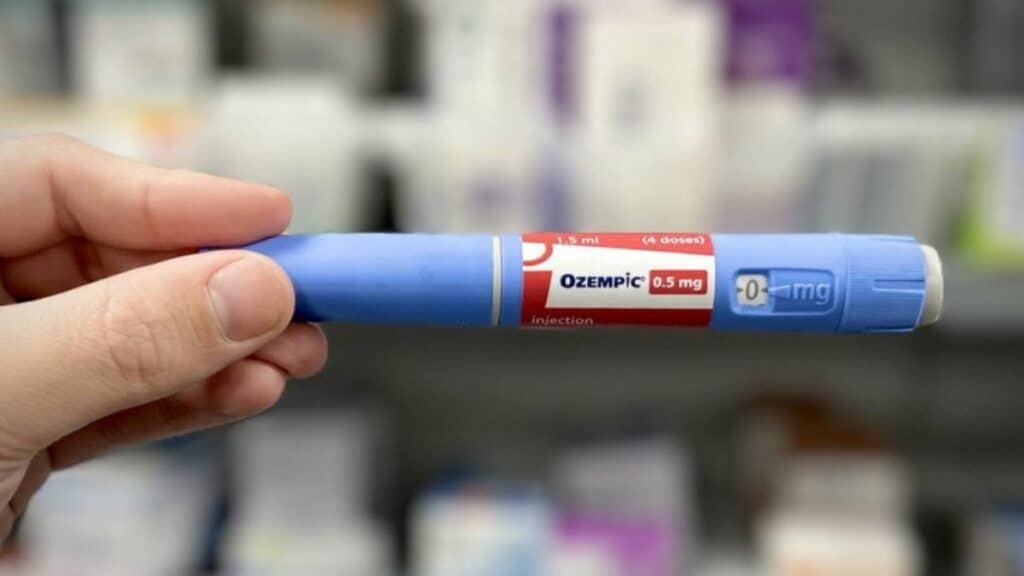
Ozempic, a once‑weekly semaglutide treatment for type 2 diabetes, is presented in many markets as a major therapeutic innovation, at a time when this chronic disease is steadily increasing in Morocco.
A few days ago, Médias24 reported the official launch of Ozempic in Morocco, even as the drug was already raising controversy over its off‑label use for weight loss.
Beyond the misuse controversy, a new issue is emerging: access to affordable generics. According to ITPC MENA, Morocco’s regulatory framework risks turning Ozempic into a "drug for the wealthy."
Data exclusivity: a barrier to Ozempic generics
Morocco grants five years of data exclusivity to any innovative drug. During this period, generic manufacturers are prohibited from relying on existing data to obtain market authorization.
In practice, this means that even when a generic is already available abroad, proven safe and effective, and not subject to valid patents, it remains blocked in Morocco. Producers are left with only one option: undertaking new comprehensive clinical trials; a costly, lengthy, and in some cases, ethically questionable process.
According to ITPC MENA, this rigidity goes beyond international requirements, including those of the World Trade Organization (WTO), which grant countries flexibility to accelerate access to essential treatments. As a result, Morocco is temporarily depriving itself of equivalent but far more affordable therapeutic options.
An unaffordable cost for the majority of patients
The price gap between the original and its potential generics is striking. In Europe, an Ozempic 0.5 mg pen costs around €76, adding up to more than €300 per month for four injections. By contrast, in Bangladesh, a generic such as Fitaro is marketed at about €5 per pen.
If such a generic were authorized in Morocco, it would make the treatment accessible to a wider base of diabetic patients, reduce costly medical complications, and ease the burden on the health insurance system. It would also create an opportunity for the local generic industry, at a time when the Kingdom is clearly seeking to reinforce its pharmaceutical sovereignty.
Today, ITPC MENA warns that the automatic five-year exclusivity granted to Ozempic hinders patient access and reinforces dependence on a single foreign supplier.
Several countries have revised their legal frameworks to avoid prolonged market lock-ins. Jordan, for instance, introduced a mechanism in 2015 that limits the scope of data exclusivity: it ceases to apply if the drug has been marketed abroad for more than 18 months. This enables the swift authorization of generics when the original drug is already widely available and documented.
In a new decree being prepared on market authorizations, the NGO advocates for:
- limiting the scope of data protection when a drug has been on the market elsewhere for a long time;
- excluding such protection if generics already exist in recognized regulators, or if the patent has expired;
- empowering the Drug Agency to waive data exclusivity in cases of public health concerns, budgetary constraints, or to encourage
Beyond a mere pricing issue, this controversy reflects a broader debate on Morocco's pharmaceutical sovereignty. According to ITPC MENA, by maintaining an automatic five-year exclusivity, the Kingdom forgoes the opportunity to develop its generic industry, while restricting access to an innovative drug for those in need.
à lire aussi

Article : Après Bank of Africa, Crédit Agricole du Maroc obtient à son tour gain de cause contre Hassan Derham
Le tribunal de commerce de Casablanca vient de rendre un jugement en faveur de Crédit Agricole du Maroc contre l'homme d'affaires Hassan Derham et l'une des sociétés de son groupe.
Article : Maroc-Banque mondiale : 15 milliards de dollars envisagés sur dix ans dans le nouveau cadre de partenariat
La Banque mondiale prévoit de mobiliser une enveloppe indicative de 15 milliards de dollars en faveur du Maroc sur la période 2026-2035, à travers le nouveau cadre de partenariat. Centré sur la création d’emplois, le renforcement du secteur privé, la réduction des disparités territoriales et l’amélioration du capital humain, ce nouveau cadre marque une montée en puissance de l’engagement du Groupe de la Banque mondiale dans le Royaume.
Article : Défense : pour renforcer sa maîtrise du ciel, une refondation stratégique des Forces royales air en perspective
Longtemps, le débat sur l'équilibre des forces aériennes entre le Maroc et l'Algérie s'est articulé autour d'une dichotomie classique : la supériorité technologique contre la masse numérique. Mais l'évolution rapide du contexte géopolitique et technologique en Afrique du Nord oblige à repenser ce paradigme. Explications.
Article : Avec Quadrise, la nouvelle alternative d’OCP pour décarboner ses besoins énergétiques géants
Chaque année, OCP consomme des volumes considérables de fioul industriel. Avec Quadrise, le groupe teste désormais une solution moins coûteuse et moins émettrice, susceptible d’ouvrir la voie à un déploiement commercial à grande échelle.

Article : Sécurité à Rabat : la police se dote d’un nouveau centre de surveillance en temps réel
Entièrement réaménagée, l’infrastructure doit améliorer la coordination des interventions sur le terrain, notamment en matière de circulation et de police de secours, tout en centralisant le suivi du réseau urbain de caméras.
Article : Bourse de Casablanca : un été pas comme les autres pour le MASI
Au cours des trois dernières années, l'indice phare de la place casablancaise a gagné successivement 4,06%, 3,72% et 6% entre la mi-juillet et la fin août, sans baisse systématique des volumes. En 2026, la consolidation du marché, le recul du PER estimé à 18,8x et les incertitudes extérieures dessinent une configuration différente.