
Revolut in Morocco: how the neobank could reshape the banking landscape
Revolut is preparing to enter Morocco, with details yet to be specified. How might the neobank reshape a sector already in flux? With its multi-currency services, transparent pricing, and fully digital model, the British player could set new benchmarks for the banking experience.
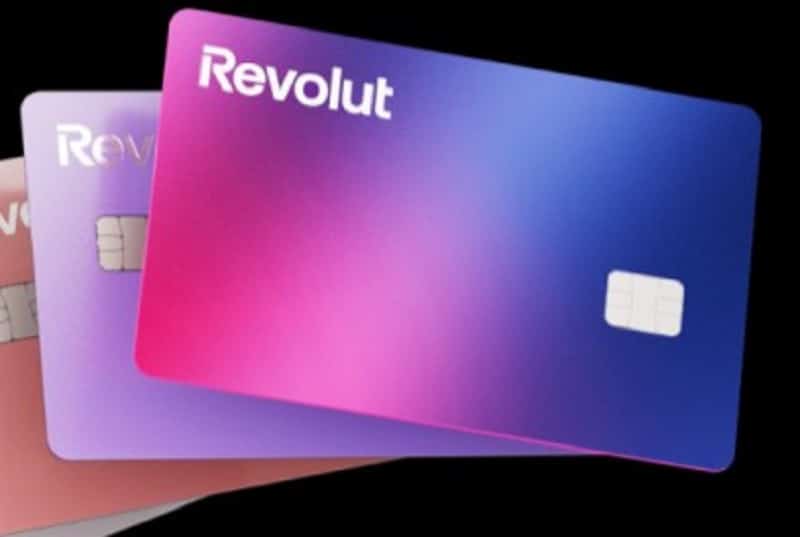
The potential arrival of Revolut in Morocco is drawing considerable attention. For several months, the British neobank has sparked interest among internet users and banking clients, enticed by the promise of a more seamless and internationally connected experience.
There is a certain popularity, or at least a genuine interest in the potential establishment of this fintech giant.
But why such enthusiasm? What could Revolut truly bring to a Moroccan banking ecosystem already dense and rapidly digitizing? And most importantly, how might it differentiate itself from local banks, known for their stability yet still defined by traditional models?
Beyond the hype, the potential arrival of Revolut raises a broader question: the evolution of banking practices in Morocco and the role that purely digital players can assume.
As a reminder, during the summer of 2025, the group recruited Amine Berrada as Head of Operations to initiate the market exploration phase and lay the initial organizational groundwork. In the fall, the appointment of Yacine Faqir as CEO Morocco marked the transition to a more institutional phase, focusing on regulatory discussions and structuring the future business model.
What Revolut could bring to Morocco
The first area where Revolut can make a difference is international transfers and currency management. "Today, a large portion of the flows between Moroccans living abroad and their families go through traditional banks or specialized operators, with sometimes high fees, unclear exchange margins, and varying delays," explains a fintech expert.
Revolut offers a different model: users can hold multiple currencies in the same account, send money abroad to numerous countries, and convert their funds at rates close to the market, with a simpler fee structure.
In practice, this means that a member of the diaspora can, for example, fund their account in euros or dollars, send funds to Morocco, and then let the recipient decide when and how to convert or use them.
"Instead of facing a package of 'bank fees + exchange margin' without real visibility, the user sees the costs displayed in the app and can choose between different currencies in seconds. This appeals to a clientele accustomed to comparing, simulating, and managing everything from their phone," he adds.
A card and an app already "Morocco-compatible" for travelers and MREs
"Revolut is already used by travelers and Moroccans living abroad when they come to the country. The card allows them to pay at merchants or withdraw dirhams from ATMs, relying on the usual international networks. The app highlights the ability to spend like a local in dirhams, within the limits of exchange rules and plan-related ceilings."
"For now, this mainly concerns users whose accounts are opened abroad. But it offers a glimpse of what a structured offering for the Moroccan market could represent: a customizable card, linked to an app that shows real-time expenses, the applied exchange rate, the ceilings, and allows freezing or unfreezing the card with a click."
This type of product could appeal to MREs who come several times a year, as well as to tourists, students, and professionals who need to travel regularly.
Beyond transfers, Revolut focuses on rising trends in Morocco: international online purchases, digital subscriptions, frequent travel, currency expenses during stays abroad.
The app enables users to generate virtual cards, track expenses by category, receive instant notifications for each payment, and, depending on the country, access additional services (travel insurance, savings, investment, etc.).
"Today, many young Moroccans juggle between multiple cards, multiple apps, and sometimes even multiple banks to manage their online purchases or expenses abroad," observes the fintech expert. "The appeal of Revolut is the idea of having a single hub: you manage your account, your currencies, your physical and virtual cards, your transfers, all from one screen. It corresponds to a modern way of using banking."
Price and technological pressure on existing players
"Finally, one of the indirect yet major contributions of Revolut would be the competitive pressure exerted on local banks. Moroccan institutions have already made significant progress in digitization, but the comparison with an international neobank, designed from the outset around mobile and pricing transparency, could set a new standard."
"The mere presence of Revolut in the landscape, even with a limited offering at first, will compel everyone to reposition themselves. Customers will compare exchange fees, withdrawal costs, the clarity of fee schedules, and the quality of apps. Ultimately, this could drive the entire market towards greater clarity and competitiveness."
What sets Revolut apart from Moroccan banks
The main difference between Revolut and Moroccan banks lies in the very nature of their models. Revolut was born digital. Everything, from opening an account to daily management, is done via mobile, without paperwork or branch appointments. Moroccan banks, by contrast, still rely on a physical model, even though many of them have made considerable progress in digitization.
"It's a question of DNA," explains the expert. "Let's say a traditional bank builds its model on a network of branches and thousands of employees. Revolut, on the other hand, was designed to operate without this infrastructure. Even a 100% digital banking subsidiary remains a service linked to a traditional bank: it is Moroccan, regulated locally, with different constraints. Revolut, on the other hand, operates as a global fintech, with a much more agile technological architecture."
Another major difference lies in its international positioning. Revolut was designed for mobile users likely to live or work in several countries. Its app allows users to hold and convert multiple currencies within the same account, at rates close to the real market. In contrast, Moroccan banks operate in an environment where the dirham is not fully convertible, limiting the multi-currency services offered to individuals.
"Moroccan banks have a territorial logic, Revolut has a usage logic. Whether you're in Casablanca, London, or Dubai, your account works the same way."
Pricing is also a point of departure. Moroccan banks rely on detailed fee schedules: account maintenance fees, transfer commissions, exchange margins, while Revolut offers clear formulas: a free plan and subscriptions based on the level of service.
"Finally, Revolut stands out with an integrated ecosystem, where all services – account, card, transfers, exchange, budgeting, even savings – are grouped in a single interface. This technological coherence, rare in Morocco where digital banking services remain fragmented from one app to another, embodies what several observers qualify as modern simplicity."
Points of caution and limitations
While Revolut's arrival in Morocco generates genuine interest, it fits within a particularly demanding regulatory framework. Any payment or deposit activity is subject to prior authorization from Bank Al-Maghrib, which ensures the stability of the financial system and consumer protection. Morocco already has a solid framework for payment institutions and fintechs, but obtaining a full banking license remains a complex process, involving strict requirements in terms of capital, governance, compliance, and risk management.
"It is important to keep in mind that the Moroccan banking market is a balanced and strategic ecosystem." "Authorities are not opposed to innovation, but they proceed cautiously to avoid any distortion of competition or systemic risk. Revolut will therefore need to adapt to the local framework, not the other way around."
"It would be challenging for Revolut to obtain, initially, a full banking license. The most realistic scenario would be that of a payment institution license, allowing it to offer certain basic services – transfers, exchange, management of prepaid accounts – without holding public deposits. This progressive approach would provide both an entry into the Moroccan market and a regulatory observation period."
Fintech. Revolut confirme évaluer activement le marché marocain

à lire aussi

Article : Mercato : Lille prévient l’Europe, Bouaddi ne partira pas à prix normal
Dans un entretien publié par Eurosport avant le huitième de finale gagné par le Maroc contre le Canada, Olivier Létang décrit le milieu de 18 ans comme un profil “unique”, déjà fort de plus de 100 matchs au haut niveau. Sans fixer de prix, le président du LOSC cite les transferts d’Anderson et de Tonali pour situer la valeur de sa pépite dans les très hautes sphères du marché.

Article : Immobilier. Les coûts de production et la pénurie de main-d’œuvre aggravent la situation du marché
Dans l’ancien, les ventes chutent sans que les prix ne cèdent vraiment. Dans le neuf, les dispositifs publics soutiennent la demande, mais ne compensent pas l’écart entre les prix proposés et les capacités d’achat. Entre les deux segments, c’est toute la chaîne du logement qui se retrouve sous tension, des ménages aux promoteurs. Décryptage.

Article : “Green Basin”, le projet stratégique qui veut faire du port de Jorf Lasfar un hub de batteries et de carburants verts
Jorf Lasfar n’est plus seulement le port des phosphates, du charbon et des grands vracs industriels. Alors que l’ANP prépare son extension, avec plus de 3.500 mètres de nouveaux quais annoncés, le site prend une autre dimension : autour de l’acide phosphorique, plusieurs projets liés aux batteries, aux électrolytes, au graphite et aux dérivés de l’hydrogène vert s’installent déjà dans son arrière-pays. Avec “Green Basin”, cette nouvelle vocation industrielle commence à trouver son débouché portuaire. Détails.

Article : Migration : la route des Canaries recule fortement, sur fond de coopération maroco-espagnole
Les arrivées irrégulières en Espagne ont baissé de 32,5% au premier semestre 2026, selon le ministère espagnol de l’Intérieur, avec une chute de 67,2% aux Canaries, tandis que certains itinéraires, notamment terrestres vers les présides occupés de Sebta et Mélilia, enregistrent des hausses localisées.

Article : Reportage. Jazzablanca : les Scorpions enflamment une soirée portée par la qualification du Maroc
Entre la retransmission de Maroc-Canada à La Place des Lions, les concerts de José James, China Moses, Brian Jackson, Hypnotic Brass Ensemble et Mehdi Nassouli, puis l’arrivée de Scorpions sur une scène Casa Anfa à guichets fermés, Jazzablanca a vécu samedi 4 juillet une soirée à part, où la ferveur du stade a fini par se confondre avec celle du rock. Récit d’une nuit où Casablanca a vibré deux fois.

Article : PHIASUD : après vingt ans de bras de fer avec les Slimani, l'Omnium marocain de pêche quitte la gouvernance
Quelques mois après la sortie de la famille Slimani, PHIASUD change de gouvernance. L'Omnium marocain de pêche abandonne ses fonctions de direction au profit d'une nouvelle équipe. Un mouvement qui dépasse la seule PHIASUD et touche également d'autres sociétés du groupe.